
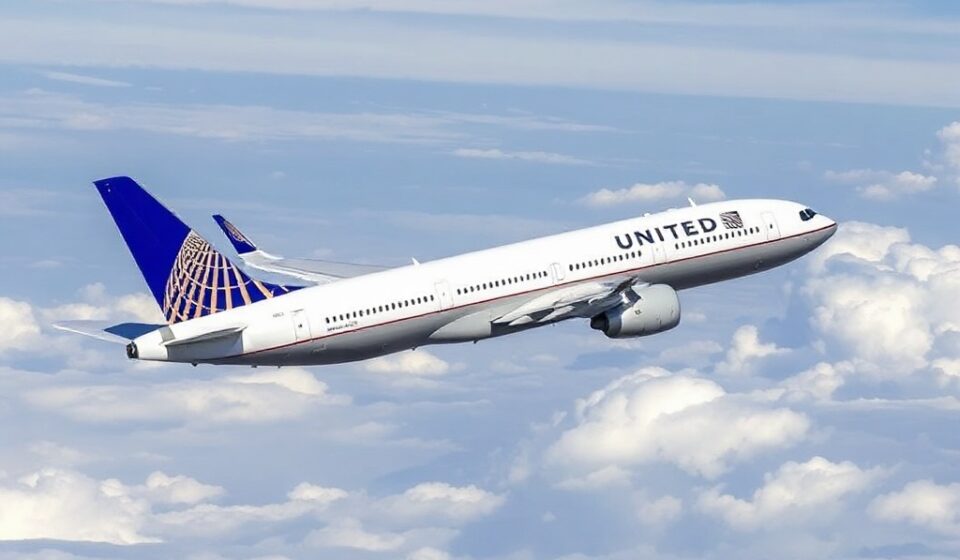

a.Imagine you’re 37,000 feet above the Atlantic, cruising comfortably on a Boeing 787 Dreamliner from Barcelona to Chicago. Suddenly, the captain’s voice cuts through the cabin: “Ladies and gentlemen, we’re experiencing a technical issue and will be diverting to London.”
It’s a scenario that would make anyone’s heart race. And according to dozens of news articles circulating online, this is exactly what happened to United Airlines Flight UA770 on July 21, 2025. The story spread rapidly across travel blogs and news sites—a cabin pressurization problem, a dramatic “7700” squawk code, and a safe emergency landing at London Heathrow.
But here’s the thing: there is no official record of this incident.
This article investigates the viral UA770 emergency diversion story, separates fact from fiction, and provides a practical guide for travelers encountering aviation news online.
Background: The Claims That Went Viral
What the Articles Claim
Multiple travel websites reported that United Airlines Flight UA770, a Boeing 787-9 Dreamliner operating from Barcelona (BCN) to Chicago O’Hare (ORD), declared an emergency on July 21, 2025 .
The key claims include:
| Detail | Reported Information |
|---|---|
| Aircraft | Boeing 787-9 Dreamliner (registration N26902) |
| Route | Barcelona (BCN) to Chicago O’Hare (ORD) |
| Passengers | 257 passengers, 12 crew members |
| Cause | Cabin pressurization problem detected mid-flight |
| Emergency Signal | Squawked 7700 (general emergency code) |
| Diverted To | London Heathrow Airport (LHR), Runway 27R |
| Landing Time | 4:55 PM BST |
| Outcome | Safe landing, no injuries, passengers rebooked |
The Problem: No Official Confirmation
Despite the dramatic details, not a single official source has confirmed this incident occurred . The story appears exclusively on content aggregation sites, not on major news outlets like CNN, BBC, Reuters, or the Associated Press .
The Aviation Herald, a respected authority on aviation incidents, has no record of this event. Flight tracking databases show no emergency diversion for UA770 on July 21, 2025. The FAA and NTSB have issued no statements .
Main In-Depth Sections
1. The Conflicting Reports: A Web of Contradictions
One of the strongest indicators that this story may be fabricated is the inconsistency across different “news” sources:
a. Conflicting Routes:
-
Most sources claim Barcelona to Chicago
-
One source claims Houston to Los Angeles
-
Another references a Los Angeles departure
b. Conflicting Diverted Destinations:
-
Most say London Heathrow
-
Some say diverted to Chicago itself
-
One claims Phoenix Sky Harbor
c. Conflicting Details:
-
Some sources say oxygen masks deployed; others say they did not
-
Some cite a pressurization issue; others provide vague “technical anomaly” descriptions
This internal inconsistency is a hallmark of AI-generated or content-farm articles that prioritize clicks over accuracy .
2. The 7700 Squawk Code: What It Actually Means
To understand why the UA770 story gained traction, it’s helpful to understand what “squawking 7700” actually means.
A squawk code is a four-digit transponder code assigned to an aircraft:
-
7700: General emergency—any in-flight emergency requiring immediate attention
-
7600: Radio communication failure
-
7500: Hijacking
When a pilot squawks 7700, air traffic control:
-
Immediately identifies the aircraft as a priority
-
Clears other traffic from its path
-
Coordinates emergency services at the nearest suitable airport
However, squawking 7700 is not rare. It happens multiple times daily across global aviation. A genuine 7700 incident would appear within hours on official platforms like the Aviation Herald and flight-tracking services .
3. Real United Airlines Diversions You Can Verify
The absence of verification for UA770 doesn’t mean United Airlines never experiences emergencies. Here are three well-documented examples:
| Flight | Date | Route | Incident | Diverted To | Reported By |
|---|---|---|---|---|---|
| UA2005 | May 29, 2026 | Chicago (ORD) to Minneapolis (MSP) | Passenger tried to breach cockpit; off-duty officers on board restrained him | Madison, WI (MSN) | CNN, Fox, FAA |
| UA236 | May 2026 | Newark (EWR) to Palma de Mallorca | Security alert from a device name; squawked 7700 | Returned to Newark (EWR) | Simple Flying |
| UA135 | 2025 | Zurich to Newark | Fire in a power outlet; crew extinguished it quickly | London Heathrow (LHR) | The Mirror |
Note that UA135, a genuine emergency diversion to Heathrow, involved a similar route and location to the claimed UA770 incident. This may explain why the fake UA770 story gained traction—it piggybacked on real news.
4. Why Did the UA770 Story Go Viral?
The AI Content Problem
The UA770 story appears to be part of a growing trend of AI-generated aviation news . These articles follow a predictable pattern:
-
Dramatic headlines designed to generate clicks
-
Vague sourcing (“sources indicate”)
-
Conflicting details across versions
-
No official statements from airlines or regulators
-
Identical phrasing across multiple sites
The “7700” Hook
The squawk code 7700 has a dramatic quality that grabs attention. Combined with a Dreamliner, a transatlantic route, and a major airport like Heathrow, the story is engineered for virality.
Confirmation Bias
Travelers are naturally anxious about flight safety. Stories like UA770 confirm these fears while also providing reassurance (safe landing, professional crew). This emotional combination makes the story highly shareable.
Practical Tips: How to Verify Aviation News
-
Check the Aviation Herald: This is the most respected source for aviation incident reporting. If it’s not there, treat it with skepticism .
-
Look for Major News Coverage: Genuine incidents are covered by Reuters, CNN, BBC, and the Associated Press within hours .
-
Verify on Flightradar24: Flight tracking data is publicly available. An emergency diversion would show up clearly.
-
Check Multiple Sources: If the details don’t match across articles, the story is likely unreliable .
-
Look for Official Statements: Airlines are required to report serious incidents. If United Airlines hasn’t issued a statement, the event likely didn’t happen.
Common Mistakes and Challenges
Mistake 1: Believing Everything on Social Media
Social media amplifies dramatic stories regardless of their accuracy. Before sharing, verify.
Mistake 2: Assuming All “News” Sites Are Credible
Content mills and AI-generated sites often appear professional but publish unverified information .
Mistake 3: Confusing Similar Incidents
The genuine United Airlines UA135 fire incident at Heathrow may have been confused with the fake UA770 story.
Mistake 4: Ignoring Timestamps
Some stories are recycled with new dates to appear fresh. Check publication dates and compare with flight data.
Pros, Cons, and Balanced Analysis
Pros of the Online Aviation News Ecosystem
-
Speed: Information travels fast
-
Diversity: Multiple perspectives available
-
Accessibility: Anyone can report and share
Cons
-
Misinformation: Fake stories spread rapidly
-
No Accountability: Content farms face few consequences
-
AI-Generated Content: Automated writing tools produce convincing but inaccurate articles
Balanced View
Aviation safety journalism serves an important purpose, but the rise of AI-generated content has made it harder to distinguish fact from fiction. The UA770 story is a case study in how quickly misinformation can spread and why readers must remain vigilant.
Future Trends and Predictions
-
Increased Regulation: Expect pressure on content farms and AI-generated news sites as misinformation concerns grow.
-
Verification Tools: AI tools that detect AI-generated content will become more common, helping readers identify fake stories.
-
Official Sources as Anchors: The Aviation Herald, Flightradar24, and airline statements will remain the gold standard for verification.
-
Media Literacy Education: As fake aviation news proliferates, education around verification will become increasingly important.
-
AI Detection Integration: Social media platforms may integrate AI-detection tools to flag potentially unreliable content.
Conclusion with Key Takeaways
The United Airlines Flight UA770 emergency diversion story is a reminder of how easily misinformation spreads online. While the story is compelling, it lacks official verification and contains internal inconsistencies that strongly suggest fabrication .
Key Takeaways
-
Verify Before Sharing: Always check official sources like the Aviation Herald and major news outlets .
-
Look for Inconsistencies: Conflicting details across articles are a red flag.
-
Understand the 7700 Code: Squawking 7700 is a real emergency signal, but it doesn’t happen only in dramatic Hollywood scenarios.
-
Recognize AI Content: AI-generated articles often follow a pattern and lack original reporting .
-
Trust Verified Incidents: Real emergencies leave a clear paper trail and are reported by multiple credible sources.
Detailed FAQs
1. Did United Airlines Flight UA770 really divert to London Heathrow?
No. Despite multiple online reports, there is no official record of this incident. The story appears exclusively on content aggregation sites, not credible news sources .
2. What does squawking 7700 mean?
It’s a four-digit transponder code indicating a general emergency on board. It alerts air traffic control to prioritize the aircraft for landing .
3. How can I verify aviation news?
Check the Aviation Herald, Flightradar24, major news outlets (CNN, Reuters, BBC), and official FAA or airline statements .
4. Are emergency diversions common?
Yes. Hundreds occur annually worldwide, most due to technical issues, medical emergencies, or weather. They rarely result in injuries.
5. What was the real United Airlines diversion to Heathrow in 2025?
United Airlines Flight UA135 diverted to London Heathrow after a small fire broke out in a power outlet on board. The crew extinguished it, and the plane landed safely .
6. Why is AI-generated content a problem in aviation news?
AI tools can generate convincing but inaccurate articles at scale. The UA770 story is a clear example—multiple sites published conflicting versions of the same incident .
7. What should I do if I see a dramatic aviation story online?
Before sharing, check multiple sources, look for official statements, and verify on flight tracking platforms. If only one or two sites cover it, treat it with skepticism.
Sources
-
Travel and Tour World: “United Airlines Flight Boeing 787-9 Dreamliner from Barcelona to Chicago Safely Diverts to London Heathrow”
-
Travel and Tour World: “Safe Landing for United Airlines Flight UA770 After Emergency Diversion to Chicago”
-
Travel and Tour World: “United Airlines Flight from Barcelona to Chicago Declares Emergency Mid-Air and Diverts to London Heathrow”
-
Atholtonnews: “United Airlines Flight UA770 Emergency Diversion: Real or AI Fiction?”
-
The Mirror: “United Airlines mid-air emergency as fire starts and plane diverts to Heathrow”
-
BizzBuzz: “United Airlines Flight UA770 Makes Emergency Landing at Heathrow After Mid-Air Technical Anomaly”
-
Cool Slangs: “United Airlines Flight UA770 Emergency Diversion – Explained in Detail