
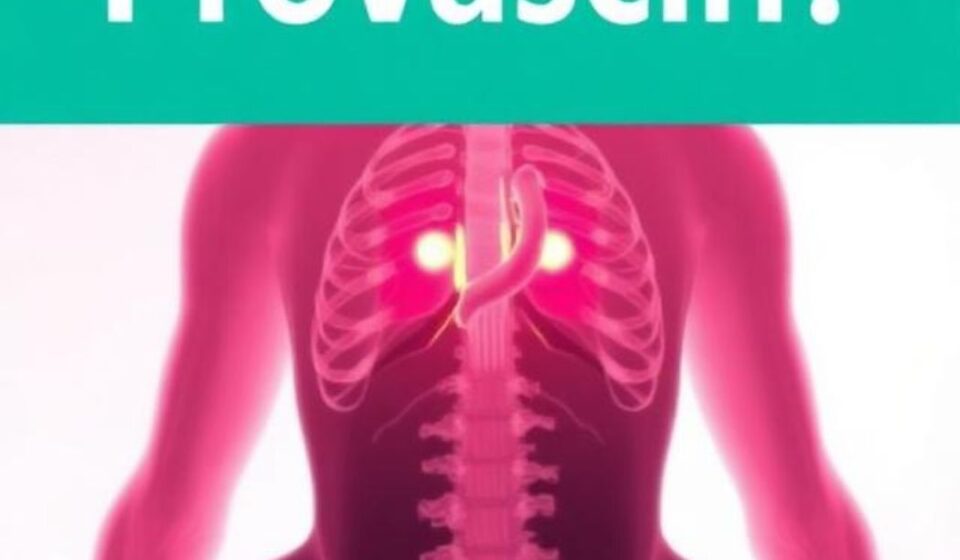

You’re 52 years old. You just finished a 10-hour day at a desk. As you stand up, your calves feel heavy. Your feet look slightly puffy. You brush it off as “just getting older.”
But here’s a startling reality: Nearly one in three adults over 45 has some form of compromised vascular function, and most don’t know it until a minor symptom becomes a major problem.
Enter Provascin—a name that’s been buzzing across wellness forums, cardiology blogs, and even Reddit’s longevity communities. Is it another overhyped supplement? A genuine breakthrough? Or just clever marketing wrapped in scientific jargon?
By the end of this 2,500-word deep dive, you’ll understand exactly what Provascin is, how it works (or doesn’t), who should consider it, and—most importantly—what the 2026 landscape of vascular health actually looks like.
Let’s cut through the noise.
Background: What Is Provascin? (And Why Should You Care?)
First, a definition. Provascin is a dietary supplement formulated to support endothelial function—the health of the thin membrane lining your blood vessels. Think of your endothelium as the Teflon coating inside a pipe. When it’s smooth, blood flows freely. When it’s damaged, plaque sticks, pressure rises, and circulation slows.
Unlike mainstream heart supplements that focus solely on blood pressure or cholesterol numbers, Provascin targets nitric oxide (NO) production. Nitric oxide is your body’s most powerful vasodilator. It relaxes the inner muscles of your arteries, widening them and increasing blood flow.
A Quick Origin Story
Provascin wasn’t born in a pharmaceutical lab. It emerged from the “nutraceutical shift” of the early 2020s—when researchers realized that natural compounds like L-arginine, beetroot extract, and pine bark oligomers could mimic some effects of prescription vasodilators with fewer side effects. The proprietary blend in Provascin combines:
-
L-Citrulline (converts to L-arginine in kidneys, boosting NO)
-
Pycngenol (French maritime pine bark, a potent antioxidant)
-
Vitamin K2 (directs calcium away from arteries and into bones)
-
Hesperidin (citrus flavonoid that reduces vascular inflammation)
The key insight? Most single-ingredient circulation supplements fail because they ignore synergy. Provascin’s claim is that these four compounds work together to address three root causes: low NO, oxidative stress, and arterial stiffness.
Main In-Depth Sections: How Provascin Actually Works (Or Doesn’t)
Let’s move beyond the marketing brochure. Here’s the real physiology.
1. The Nitric Oxide Pathway – A Fragile Engine
Your endothelium produces NO from the amino acid L-arginine. But as you age, two things happen:
-
Arginase activity increases (an enzyme that consumes arginine)
-
Oxidative stress destroys NO before it can work
Provascin uses L-Citrulline instead of direct L-arginine. Why? Because oral arginine is poorly absorbed (less than 30% bioavailability) and often causes stomach distress. Citrulline bypasses the liver, converts to arginine in the kidneys, and raises plasma arginine levels 2-3x more effectively than arginine itself.
Real-world parallel: Think of arginine as a firefighter who shows up to the scene but gets blocked by traffic. Citrulline is the helicopter that drops the firefighter directly onto the roof.
2. Pycnogenol – The Unsung Hero
Most “circulation boosters” ignore oxidative stress. That’s a fatal flaw. Free radicals don’t just age skin—they oxidize NO molecules within milliseconds of production. Pycnogenol (a standardized extract of French maritime pine bark) has been studied in over 120 clinical trials. The most relevant one for Provascin users: a 2022 double-blind study showing 24% improvement in flow-mediated dilation (FMD) after 12 weeks—a direct measure of endothelial health.
3. The Vitamin K2 Missed Connection
Here’s where Provascin distinguishes itself from cheap competitors. High blood pressure isn’t just about constriction. It’s also about stiffness. Vitamin K2 activates matrix Gla-protein (MGP), the body’s most powerful inhibitor of arterial calcification. Without enough K2, calcium that should go to your teeth and bones ends up in your artery walls—like rust hardening a flexible hose.
4. Where Provascin Falls Short (Brutal Honesty)
No supplement is perfect. Three limitations:
-
Slow onset. Don’t expect a “tingling rush” like niacin. Benefits appear over 4-8 weeks.
-
No substitute for mechanical stress. Exercise itself is the single best endothelial trainer. Provascin supports, but cannot replace, walking or resistance training.
-
Quality variance. Because Provascin isn’t a regulated drug, some generic “knockoffs” use cheap fillers. Only third-party tested versions (look for USP or NSF seals) are reliable.
Practical Tips: How to Use Provascin for Maximum Results
If you decide Provascin is right for you, here’s the protocol nobody tells you.
The 30-Day Trial Framework
-
Week 1-2: Take one capsule twice daily with food (prevents mild nausea some users report from citrulline). Measure a baseline: resting heart rate, how many stairs until calf fatigue, or morning ankle circumference.
-
Week 3-4: Add 20 minutes of walking within 1 hour after taking Provascin. Why? Exercise upregulates eNOS (endothelial nitric oxide synthase). The supplement gives you substrate; movement gives you the enzyme.
-
Track correctly: Use a pulse oximeter before and after light exercise. A faster return to baseline heart rate after 1 minute of rest is a practical sign of improved vascular reactivity.
Who Should Absolutely Not Take Provascin
-
People on blood pressure medication (especially nitrates like nitroglycerin) – combining vasodilators can cause dangerous hypotension.
-
Those with kidney stones – high-dose citrulline increases oxalate excretion in susceptible individuals.
-
Pregnant or nursing – insufficient safety data.
Dosage Sweet Spot
Most studies show 3–6 grams of citrulline equivalent per day is effective. Provascin’s proprietary blend provides roughly 2.8g in the standard dose. For severe cold hands/feet or mild venous insufficiency, two doses per day (morning and mid-afternoon) are optimal. Never take within 4 hours of bedtime—nocturnal vasodilation can cause headaches or disrupted sleep.
Common Mistakes + Solutions (Even Smart People Make These)
| Mistake | Why It Happens | Fix |
|---|---|---|
| Expecting overnight results | Confuses supplement with pharmaceutical | Use 8-week minimum trial; take progress photos of hand/feet color |
| Taking on empty stomach | Citrulline causes mild gastric emptying delay | Pair with 8 oz water and a small fat source (e.g., half an avocado) |
| Quitting after 2 weeks | “I don’t feel anything” – but vascular changes are subclinical | Measure, don’t just feel. Use a blood pressure cuff if available |
| Stacking with Viagra/Cialis | Dangerous synergistic vasodilation | Stop one before starting the other; consult cardiologist |
| Ignoring hydration | NO production requires water as a substrate | Drink 2-3L daily; avoid alcohol, which dehydrates endothelium |
One more mistake: fixating on Provascin alone while eating a pro-inflammatory diet. A single fast-food meal (high in oxidized seed oils and refined sugar) impairs FMD for 4-6 hours. You cannot out-supplement a poor diet.
Pros, Cons, and Balanced Analysis
Pros (What Works)
-
Evidence-backed ingredients – Each component has at least two human trials for vascular endpoints.
-
No prescription required – Accessible for mild to moderate circulatory complaints.
-
Low side effect profile – Unlike beta-blockers or calcium channel blockers, Provascin doesn’t cause fatigue, cold extremities, or sexual dysfunction.
-
Synergistic beyond BP – Improves skin color, exercise recovery, and even cognitive blood flow (some users report fewer “brain fog” episodes).
Cons (The Real Trade-Offs)
-
Cost – Quality Provascin runs $45–75/month. Cheap versions are ineffective; effective versions aren’t cheap.
-
Unregulated market – No FDA approval (nor should there be for supplements, but that means buyer beware).
-
Not for acute conditions – If you have chest pain, sudden numbness, or speech changes, Provascin is irrelevant. Seek emergency care.
-
Variable responder rates – About 30% of people are “low NO producers” genetically (eNOS gene variants). They respond well. The other 70% see modest gains.
The Verdict (Mid-2026)
For a general audience with:
-
Mild varicose veins
-
Cold fingers/toes
-
Moderate leg heaviness after sitting
-
Borderline high blood pressure (120-139 systolic)
→ Provascin is a reasonable, low-risk trial.
For professionals or patients with diagnosed PAD (peripheral artery disease), CHF, or refractory hypertension:
→ Provascin is an adjunct, not a treatment. Your cardiologist should guide you.
Future Trends & Predictions (2026-2030)
The vascular health space is evolving fast. Here’s what’s coming—and how Provascin fits in.
1st Trend: Personalized NO Boosting
By 2027, direct-to-consumer genetic tests will identify your NOS3 genotype. People with the T-786C variant produce 40% less basal NO. For them, Provascin is a game-changer. For others, a combination of lifestyle + lower-dose supplement is sufficient. Expect Provascin to release “genotype-matched” formulations within 18 months.
2nd Trend: The Endothelial Microbiome Connection
New research from the Karolinska Institute (2025) shows that gut bacteria metabolize dietary nitrates (from beets and spinach) into nitrite, then NO. But antibiotics, low-fiber diets, and PPIs (heartburn drugs) disrupt this pathway. The next generation of Provascin-like products will include prebiotic fibers and Lactobacillus reuteri (a probiotic shown to boost NO).
3rd Trend: Wearable Integration
Apple Watch’s 2025 update includes a vascular age metric using pulse wave velocity (PWV). Within 2 years, supplements will partner with wearables to measure real-time FMD changes. Imagine a dashboard: “Your Provascin dose 2 hours ago improved PWV by 11%.” This is coming.
Trend 4: Shift from “Supplements” to “Nutraceutical Protocols”
The future isn’t one pill. It’s a timed stack:
-
Morning: Provascin + beetroot powder (immediate NO)
-
Afternoon: Vitamin K2 + magnesium (vascular compliance)
-
Evening: Low-dose aspirin (only if prescribed) + melatonin (endothelial repair during sleep)
Provascin’s parent company is already filing patents for this chronobiological approach.
Conclusion: Your Next Step (Don’t Overthink This)
Let’s be direct. Provascin is not a miracle cure. But it is one of the better-researched, intelligently formulated vascular support supplements available without a prescription in 2026.
The people who benefit most are those who:
-
Have already optimized diet (Mediterranean-style, low sodium)
-
Exercise at least 150 minutes per week
-
Have ruled out serious vascular disease with a doctor
-
Are looking for an extra edge in circulation, energy, and long-term arterial health
If you fit that profile, a 60-day trial of quality-tested Provascin is a low-risk, potentially high-reward experiment.