
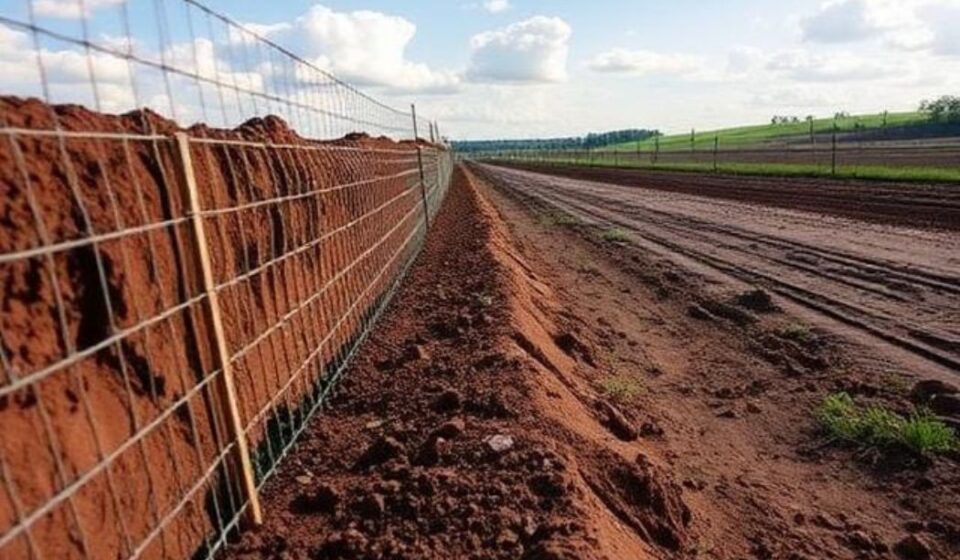

When you hear the phrase “Earth Control Measure,” what comes to mind? For some, it conjures images of massive geoengineering projects—giant mirrors in space or chemicals pumped into the sky. For others, specifically those in construction and environmental management, it refers to the practical, muddy work of keeping soil in its place and toxins out of our water.
The truth is, Earth Control Measures (ECMs) exist on two fronts: the local (erosion and sediment control on construction sites) and the global (climate engineering aimed at reversing planetary damage).
Whether you are a site manager trying to pass a stormwater inspection or a climate advocate looking at the future of the planet, understanding these measures is crucial. In this post, we’ll break down what ECMs really are, why they matter right now, and how they are evolving to save our topsoil—and our civilization.
What Are Earth Control Measures? (The 30,000-Foot View)
At its core, an Earth Control Measure is any action taken to prevent the degradation of the Earth’s surface and atmosphere.
We can split this concept into two distinct categories:
1. Environmental & Construction Safety (Micro-level)
This is the most common technical use of the term. ECMs here refer to the physical systems used to stop soil erosion, manage sediment runoff, and control dust. Whenever a bulldozer touches dirt, ECMs are supposed to kick in.
2. Climate Engineering & Geoengineering (Macro-level)
This is the controversial world of deliberately manipulating the Earth’s climate system to counteract global warming. Think less about silt fences and more about injecting aerosols into the stratosphere.
While these two scales seem worlds apart, they share a common goal: stabilizing our environment.
Part 1: Earth Control in Construction (The “Mud and Water” Edition)
When we talk about ECM in the context of construction and urban development, we are talking about compliance, safety, and physics. According to the Land Transport Authority (LTA) and modern safety standards, ECMs are non-negotiable for any project disturbing the soil.
The Core Problems ECM Solves
Without these measures, rain hits bare soil, loosens it, and creates sediment runoff. This runoff is the number one pollutant by volume in many waterways.
-
Water Pollution: Muddy water chokes fish, blocks sunlight, and carries chemicals into rivers.
-
Flooding: Sediment clogs storm drains, turning streets into swimming pools.
-
Air Quality: Dry soil turns into dust, causing respiratory issues for workers and neighbors.
The Toolbox: Erosion vs. Sediment Control
A successful plan uses two lines of defense.
A. Erosion Control (Stopping the movement)
Goal: Keep soil on the ground and out of the air.
-
Hydromulching & Vegetation: Planting grass or laying straw blankets to hold soil in place.
-
Armoring: Using erosion control blankets or concrete mats (articulated concrete blocks) on steep slopes.
-
Paving: Covering access roads with gravel or concrete to stop tire tracks from turning to mud.
B. Sediment Control (Capturing the movement)
Goal: Catch the dirt that does get washed away.
-
Silt Fences: The classic orange or black fabric barriers that filter runoff.
-
Sediment Basins: Temporary ponds where dirty water sits so the dirt sinks to the bottom.
-
Turbidity Curtains: Used near water bodies to contain silt within a specific area.
Advanced Tech: The “Smart” Construction Site
Gone are the days of just guessing. Modern Earth Control Measures require real-time data. In high-regulation environments (like Singapore), sites must now use:
-
Silty Water Treatment Units: Machines that add chemicals (coagulants) to dirty water to force the dirt to clump up and settle out.
-
IoT Sensors & CCTV: Continuous monitoring of Total Suspended Solids (TSS). If the water leaving the site exceeds 50 mg/L, the system automatically shuts off the discharge valve.
Pro Tip for Contractors: Always plan your ECM before you dig. Retain existing trees whenever possible—roots are nature’s strongest erosion control .
Part 2: Earth Control on a Planetary Scale (The “Sunblock” Edition)
While construction crews manage soil, scientists are trying to manage the thermostat. This is known as geoengineering.
Because global efforts to cut emissions have been slower than hoped, researchers are investigating “Plan B” options to buy us time. The UK’s ARIA recently funded £56.8 million into this research.
Here are the three most discussed planetary-scale Earth Control Measures:
1. Stratospheric Aerosol Injection (SAI)
-
How it works: High-altitude aircraft spray tiny particles (like sulfur or calcium) into the stratosphere. These particles reflect sunlight back into space before it heats the planet.
-
The Analogy: It mimics a volcanic eruption (like Mount Pinatubo in 1991, which cooled the Earth by 0.5°C for a year).
-
The Risk: It doesn’t remove CO2, so ocean acidification continues. Plus, it could mess with regional weather patterns (e.g., reducing rainfall in certain areas).
2. Marine Cloud Brightening (MCB)
-
How it works: Specially designed boats spray a fine mist of seawater into low-lying marine clouds. The salt crystals increase the number of droplets in the cloud, making it brighter and more reflective.
-
The Use Case: Protecting sensitive ecosystems like the Great Barrier Reef from bleaching by shading the water below.
-
The Status: Small-scale experiments are currently underway in Australia.
3. Carbon Dioxide Removal (CDR)
-
How it works: Massive machines (Direct Air Capture) suck CO2 out of the sky and pump it into deep rock formations.
-
Why it’s less controversial: Unlike SAI, this actually fixes the root problem (too much CO2) rather than just hiding the sun.
-
The Challenge: It is currently incredibly expensive and energy-intensive.
Why Both Approaches Matter Right Now
You might be wondering: Should we focus on silt fences or space mirrors?
The answer is both.
-
Construction ECMs are an immediate necessity. Urban development isn’t stopping. Without proper silt control, we destroy aquatic life and contaminate drinking water daily.
-
Geoengineering is an emergency brake. If we hit a climate tipping point (like the collapse of a major ice sheet), we may need SAI or MCB to rapidly drop temperatures while we figure out the carbon problem.
However, experts warn that geoengineering is not a substitute for cutting emissions. As Clive Hamilton notes in Earthmasters, seizing control of the planet’s atmosphere raises massive ethical and political questions.
The Bottom Line: Start Small, Think Big
Whether you are managing a construction site or just worried about the future, the philosophy of Earth Control Measures is the same: Resilience.
For the construction professional, ECM means compliance and safety. For the global citizen, ECM means research and advocacy.
Your Action Steps:
-
If you are in construction: Check your site after every rain. Are your silt fences intact? Is your washout system working? Don’t wait for the fine to arrive .
-
If you are an advocate: Support carbon removal technologies, but stay skeptical of untested solar radiation management. Demand emissions reductions first and foremost.
We only have one Earth. Whether we are controlling the mud at our feet or the light from the sky, we must act as responsible stewards.
Frequently Asked Questions (FAQs)
Q: What is the most common Earth Control Measure on a construction site?
A: The silt fence is the most common. It is a temporary barrier made of filter fabric that catches sediment while letting water pass through.
Q: Is geoengineering safe?
A: Most scientists agree we don’t know enough yet. Techniques like Stratospheric Aerosol Injection could have unforeseen side effects on global weather patterns, which is why small-scale research is critical before any large-scale rollout.
Q: What is the “50 mg/L” rule?
A: This is a strict environmental standard for water discharged from a construction site. It means the water cannot contain more than 50 milligrams of suspended soil particles per liter of water.
Q: Can landscaping be an Earth Control Measure?
A: Absolutely. Grasses, shrubs, and trees are permanent erosion control measures. Their root systems bind the soil together naturally, making them more effective than plastic barriers in the long run.