
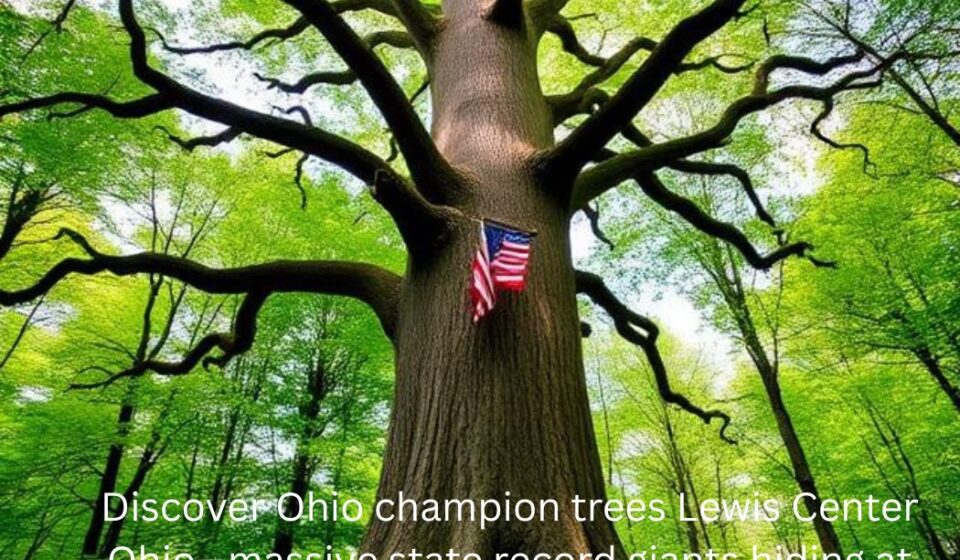
Ohio Champion Trees Lewis Center Ohio: A Guide to Nature’s Hidden Giants

Lewis Center, Ohio isn’t just known for its great schools and friendly neighborhoods. Tucked away along the waterways and within the lush parks of Delaware County, some of the largest living organisms in the state are taking root.
We aren’t talking about skyscrapers or stadiums. We are talking about Ohio Champion Trees.
These are the biggest trees of their species—massive cottonwoods, ancient white oaks, and towering sycamores that have witnessed history unfold over centuries. If you are looking for a unique outdoor adventure in 2026, here is your guide to the Ohio Champion Trees near Lewis Center .
What Exactly is a “Champion Tree”?
Before we reveal where they are hiding, it helps to understand what makes a tree a “champion.” It’s not just about being tall.
The Ohio Department of Natural Resources (ODNR) uses a specific scoring system to crown these giants. They add up three factors to create a total point score :
-
Trunk Circumference (inches at 4.5 feet high)
-
Total Height (feet)
-
¼ of the Average Crown Spread (feet)
The tree with the highest score for its species wins the title. Currently, Ohio boasts 14 National Champions (the biggest in the entire USA), but Lewis Center is home to some incredible State Champions that will leave you speechless .
The Legendary Giants of Alum Creek
The crown jewel of the Lewis Center tree scene resides in Alum Creek State Park. If you only have time to visit one tree, this is it.
The National Champion Eastern Cottonwood
Located near the intersection of Africa Road and Cheshire Road, this tree is a beast by every definition of the word. This Eastern Cottonwood was once recognized as the National Champion for its species. While a few storms have trimmed its peak over the years, it remains an absolute titan of the forest .
-
The Stats: It measures roughly 380 inches around (that’s over 31 feet wide!), stands about 122 feet tall, and has a crown spread stretching over 100 feet .
-
The Experience: Standing next to it gives you a feeling of “forest bathing.” You look up, and the branches seem to scratch the sky. It’s a humbling, peaceful experience you can’t get in a city square .
The Historic White Oak of Lewis Center
While the Cottonwood wins for height and girth, the White Oak wins for age and character. Located within the greater Lewis Center area (near the Orange Township corridors), this tree is estimated to be over 200 years old .
In fact, some arborists believe this tree is a “pre-settlement remnant.” That means it was already standing tall before the first settlers plowed the fields of Delaware County .
-
Why it matters: White Oaks are cornerstones of the ecosystem. In a “mast year,” this single giant can drop thousands of acorns, feeding deer, squirrels, and birds for miles around .
Where to Find Champion Trees (Location Guide)
One of the coolest things about Lewis Center is that you don’t have to hike deep into the wilderness to find these trees. Many champions are hiding in plain sight.
Here is your 2026 scouting report for Lewis Center Ohio Champion Trees:
| Species | Approx. Location | Why It’s a Champion |
|---|---|---|
| Eastern Cottonwood | Alum Creek State Park (Africa Rd) | Massive circumference; former National Champion |
| Chinquapin Oak | Highbanks Metro Park | Rare oak species with massive height |
| Black Walnut | Near Lewis Center Road | Valued for nuts and massive branch spread |
| American Sycamore | Alum Creek Shoreline | Striking white bark and towering height |
| Historic White Oak | Orange Twp. / Private Land | Over 200 years old; historic landmark |
Bonus Locations: Believe it or not, you can find state-recognized champion trees on school grounds! Olentangy Liberty High School and Olentangy Orange High School both have recorded champion specimens on their property .
Why Lewis Center is a Hotspot for Giants
You might wonder, Why are these trees so big here? It comes down to three factors :
-
Glacial Soil: The glaciers retreated thousands of years ago, leaving behind deep, fertile soil that allows roots to go wild.
-
Water Access: Creeks like Alum Creek provide a steady supply of water, allowing these trees to survive droughts that kill smaller plants.
-
Protection: Because much of this land was preserved as Metro Parks or large private estates, the trees were never cut down by early farmers.
Planning Your “Big Tree” Tour
If you want to see these natural wonders, here is how to do it right :
-
Best Time to Go: Fall is spectacular (the leaves frame the giants perfectly) or early spring before the undergrowth gets too thick.
-
What to Bring: Good walking shoes (roots get slippery), bug spray for the summer, and a wide-angle lens for your camera. You cannot fit a 100-foot crown in a standard selfie!
-
Respect the Land: Many champion trees are on private property or delicate root zones. View them from public trails or roadsides; do not carve initials into the bark.
How You Can Help
Have you spotted a massive tree in your backyard that looks like it could beat these records? The ODNR encourages citizens to become “Citizen Scientists.” You can nominate a tree through the ODNR Division of Forestry website. If it measures higher than the current record, you might have just discovered the new state champion .
Conclusion
The Ohio Champion Trees of Lewis Center are more than just flora; they are living monuments. They represent resilience, history, and the raw beauty of the Buckeye State.
Whether you are hiking the trails of Highbanks or driving down Africa Road, take a moment to look up. You might just be standing in the shadow of a National Champion.
Have you visited the Alum Creek Cottonwood? Share your photos and tree-spotting stories in the comments below!