
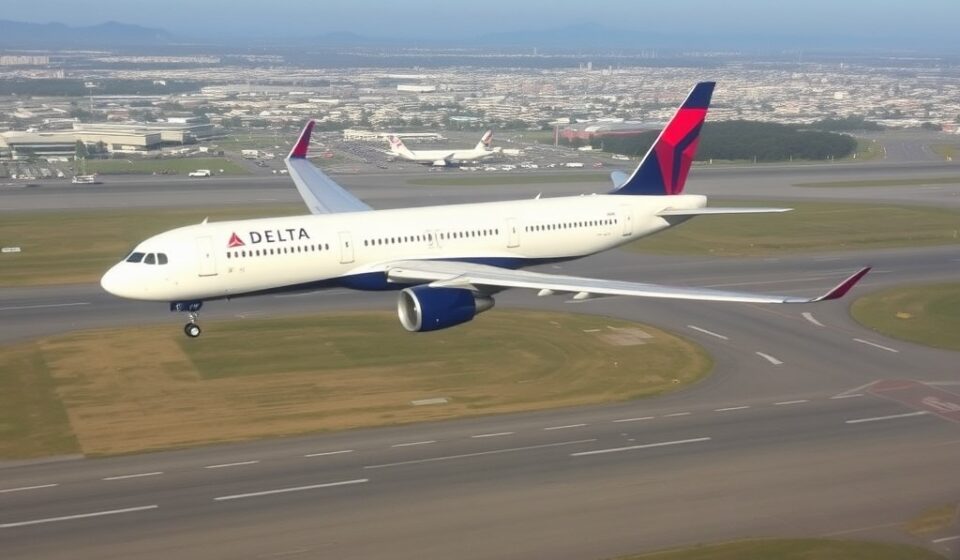

Delta Flight dl275 Japan Diversion lax: A routine flight across the ocean turned into an unexpected journey back to California.
On a recent evening, Delta Air Lines Flight DL275 took off from Detroit. Its destination was Tokyo, Japan. However, the flight never made it to the Haneda airport. Instead, the Airbus A350 made a sharp U-turn and landed at Los Angeles International Airport (LAX).
Here is the full story of what happened at 38,000 feet.
What Went Wrong?
The issue began mid-flight. The plane was cruising over the Pacific Ocean. Suddenly, the cockpit crew received a warning. They detected a mechanical issue with the aircraft.
Specifically, the problem was related to the engine ice protection system. This system is critical. It prevents ice from building up on the engine. Ice can cause engine failure. The pilots decided not to take any risks.
Why Did They Choose Los Angeles?
The plane was already far from the West Coast. So why not turn back to Detroit? Los Angeles was the smarter choice.
Here is the logic behind the diversion:
-
Distance: LAX was closer than Detroit at that point.
-
Maintenance: LAX is a major Delta hub. They have the right mechanics and parts for the A350 there.
-
Safety: Flying further toward Japan with a faulty system was too dangerous.
The pilots made a “precautionary diversion.” They chose safety over speed.
What Happened After Landing?
The aircraft landed safely in Los Angeles. It touched down around 1:38 AM local time. There were no injuries. The plane was not in an emergency state upon landing.
Once on the ground, the process was quick:
-
Passengers: Delta staff met the plane. They helped passengers get off the plane.
-
Accommodations: The airline provided hotel rooms and meal vouchers.
-
Re-booking: Agents worked overnight to book everyone on new flights to Tokyo.
The aircraft was pulled into a hangar for inspection. It took about 18 hours to fix the problem.
The Bigger Picture: Safety First
This event was not a crash. It was not a near-miss. It was a textbook example of how safety systems are supposed to work.
-
The plane detected a tiny issue early.
-
The pilots followed procedure and diverted.
-
The airline supported the passengers.
Delta later released a statement. They apologized for the delay. But they emphasized that the safety of their customers and crew is their top priority.
Key Takeaways for Travelers
If you ever find yourself on a diverted flight, remember this:
-
Stay calm. The pilots are trained for this.
-
Trust the crew. They know what they are doing.
-
Be patient. The airline will get you where you need to go.
Flight DL275 did not reach Tokyo that night. But it reached its most important destination: a safe landing.
The diversion was an inconvenience. But in the world of aviation, an inconvenience is always better than an accident.
Frequently Asked Questions: Delta Flight dl275 Japan Diversion lax
1. What exactly happened to Delta Flight DL275?
Delta Flight DL275 was flying from Detroit to Tokyo on May 28, 2025 . While cruising over the Pacific Ocean, the pilots detected a problem. The issue was with the engine anti-ice system . This system prevents ice from forming on the engines. As a safety precaution, the pilots decided to divert the plane. They landed safely at Los Angeles International Airport (LAX) .
2. Why did the pilots choose to land in Los Angeles?
The choice to land at LAX was very strategic . First, when the issue arose, the plane was closer to Los Angeles than it was to Detroit . Second, LAX is a major hub for Delta Air Lines . This means it has the right mechanics, spare parts, and facilities to repair a large aircraft like the Airbus A350 . It was the safest and most practical option.
3. Was the flight in danger at any point?
No, the flight was not in immediate danger . There was no emergency declared, no smoke, and no turbulence . The plane’s advanced systems detected a fault early . The pilots then took a preventive measure to ensure safety. The landing at LAX was smooth and routine . The event is considered a textbook example of safety systems working correctly .
4. What is an engine anti-ice system, and why is it important?
The engine anti-ice system is a critical safety feature . It prevents ice from building up on the engine parts . At high altitudes, the air temperature can be far below freezing . Ice buildup can disrupt airflow and damage the engine. For a long flight over the ocean, a working anti-ice system is essential . The pilots chose to divert rather than risk a failure hours from land .
5. How long was the plane grounded in Los Angeles?
The Airbus A350, registered as N508DN, was grounded for inspection and repair . The maintenance team worked on the aircraft to fix the anti-ice system issue . The plane remained on the ground for approximately 18.5 hours . After thorough testing, it was cleared to return to regular service .
6. What happened to the passengers on the flight?
Delta Air Lines took care of the affected passengers . After the plane landed, the airline provided hotel accommodations and meal vouchers . Delta staff worked to rebook everyone on new flights to Tokyo Haneda Airport . While the diversion caused a delay, passengers were assisted to complete their journeys safely.
7. Are passengers entitled to compensation for this diversion?
This depends on the specific circumstances and regulations.
-
For EU Flights: If a flight departs from an EU airport, passengers might be eligible for up to €600 under EU Regulation 261/2004 . However, this flight departed from the US, so EU rules do not apply .
-
For US Flights: US law does not mandate cash compensation for mechanical delays. However, Delta’s own “Customer Commitment” pledges to rebook passengers and provide meals or hotels for significant delays within their control .
-
Right to Care: Even without cash compensation, Delta is responsible for the “Right to Care,” which includes meals and accommodation . Passengers who incurred expenses should keep receipts and submit a claim to Delta for reimbursement .
8. Could the plane have continued to Tokyo?
Technically, the plane could have kept flying . But that would have been a major safety risk . The flight would have spent several more hours over the open ocean . If the anti-ice system had failed completely, there would be no nearby airports for an emergency landing . The diversion was the smart and responsible choice.
9. Is the Airbus A350 a safe plane?
Yes, the Airbus A350-900 is one of the most advanced and safest aircraft in the world . This incident actually proves its safety. The plane’s monitoring systems detected a minor fault immediately . It alerted the pilots long before it became a serious problem. This early warning allowed the crew to take action and land safely .
10. Are flight diversions common?
Flight diversions are relatively rare, but they do happen . They can be caused by weather, medical emergencies, or technical issues . Airlines and pilots train extensively for these scenarios . The goal is always the same: to prioritize the safety of everyone on board . The DL275 diversion was a perfect example of this safety-first approach in action.