
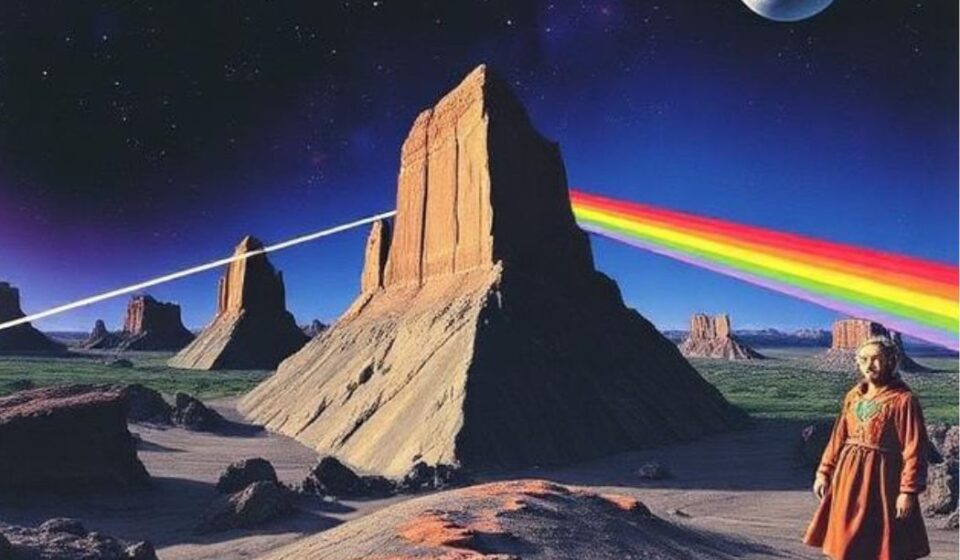

Pink Floyd’s music is a journey into the depths of the human experience, but a visual language that is just as powerful and profound has always perfectly complemented their sound. From the hypnotic refraction of light to a giant inflatable pig soaring over a power station, the band’s album covers are iconic works of art. These designs didn’t just sell records; they reshaped the visual landscape of rock music and created some of the most instantly recognizable images in modern culture.
The Architects of a Visual Identity
The stories behind these iconic covers are inseparable from the legendary British design collective, Hipgnosis. Founded in 1968 by Cambridge schoolmates Storm Thorgerson and Aubrey “Po” Powell, Hipgnosis was born out of a close friendship with the band’s founding members, Syd Barrett and Roger Waters. Their name even came from a piece of graffiti by Syd Barrett himself, written on their apartment door: “hip gnosis,” meant to combine “hip” or “cool” with the Greek word for “knowledge”.
Hipgnosis didn’t just design covers; they created meticulously crafted, thought-provoking conceptual art. Their process involved listening to the music, interpreting its core themes, and then often staging elaborate, complex photo shoots long before the age of digital manipulation, using practical effects and real stuntmen to achieve their surreal visions.
Decoding the Masterpieces
Here’s a closer look at the stories and symbolism behind some of their most legendary covers.
1973: The Dark Side of the Moon
This is arguably the most famous album cover of all time. The simple yet striking image of a beam of white light passing through a triangular prism and separating into a spectrum of colors was a departure from Hipgnosis’s usual photographic style. The band had specifically asked for something graphic, not a “funny picture”.
-
The Vision: Thorgerson’s inspiration came from two sources: the band’s spectacular light shows, which were central to their concerts, and the triangle as a “symbol of thought and ambition,” a theme prevalent in Roger Waters’ lyrics. The final artwork was a perfect visual metaphor for the album’s exploration of madness, greed, and the passage of time. The back cover reversed the image, showing the colored light re-entering the prism.
-
Fun Fact: The band actually took a cut in their royalty rate to include two posters inside the sleeve without raising the album’s price.
1975: Wish You Were Here
Following the massive success of Dark Side, Hipgnosis created another unforgettable, if more unsettling, image: two businessmen shaking hands, one of them completely engulfed in flames.
-
The Vision: The album is a poignant tribute to their former bandmate, Syd Barrett, and a critique of the impersonal, “absent” nature of the music industry. The burning businessman symbolizes the feeling of being “burned” by a dishonest deal, directly referencing the lyrics of the song “Have a Cigar”. To drive the point home, the album was originally wrapped in a black shrink wrap, forcing buyers to “commit” to the album before seeing the artwork.
-
Fun Fact: The shoot was real: a stuntman in a fireproof suit was set ablaze. The fire even singed the performer’s real mustache for a moment, bringing a swift end to that day’s shoot.
1977: Animals
The cover of Animals is a masterclass in combining concept with chaotic reality. The image of a giant inflatable pink pig (nicknamed “Algie”) floating between the chimneys of the dilapidated Battersea Power Station in London is a stark, political statement.
-
The Vision: The album’s themes were drawn from George Orwell’s Animal Farm, using dogs, sheep, and pigs to satirize social classes. Roger Waters saw the power station’s “doomy, inhuman vibe” as the perfect backdrop for the “pigs” of the world to fly over. The image is a critique of capitalist and industrial power, with the pig as a symbol of greed and corruption.
-
Fun Fact: The photoshoot was a legendary disaster. On the second day, a huge gust of wind snapped the mooring ropes, and the 40-foot pig broke free, causing flights to be diverted from nearby Heathrow Airport. The final cover was a composite image using the power station from day one and the pig from day three.
1979: The Wall
Breaking from Hipgnosis due to Roger Waters’ strained relationship with them, the band turned to English illustrator and cartoonist Gerald Scarfe to design the cover for their rock opera.
-
The Vision: Scarfe’s minimalist design of a stark, white brick wall with the band’s name scrawled across it in his iconic handwriting perfectly encapsulates the album’s central theme of isolation. The protagonist has built a metaphorical wall around himself to shield from trauma, and the blank, imposing wall on the cover is the visual embodiment of that isolation.
1994: The Division Bell
After Roger Waters’ departure, Storm Thorgerson returned to create some of the band’s most monumental imagery. The cover of The Division Bell features two colossal, metallic head sculptures facing each other in a field near Ely Cathedral, England.
-
The Vision: The album was about communication—specifically, the failure to communicate. The two heads, seemingly about to speak, are actually separated and “silent.” A third face is visible in the negative space between them, symbolizing the missing link, the person who can bridge the gap or the listener completing the circuit.
-
Fun Fact: The sculpted heads were real, each over three meters (10 feet) tall and weighing 1.5 tons. They were specially built for the photoshoot.
A Universe of Other Exceptional Artwork
Beyond the most famous hits, stunning visual concepts fill Pink Floyd’s discography and help define their artistic identity.”
| Album | Year | Designer | Key Visual Element |
|---|---|---|---|
| The Piper at the Gates of Dawn | 1967 | Vic Singh | A psychedelic, kaleidoscopic band portrait shot through a prism lens. |
| A Saucerful of Secrets | 1968 | Hipgnosis | A swirling, cosmic collage inspired by Marvel Comics’ Dr. Strange. |
| Ummagumma | 1969 | Hipgnosis | A mind-bending “Droste effect” with band members appearing within themselves. |
| Atom Heart Mother | 1970 | Hipgnosis | A cow standing in a field, a brilliantly radical and attention-grabbing “anti-cover.” |
| A Momentary Lapse of Reason | 1987 | Storm Thorgerson | Hundreds of hospital beds lined up on a beach, representing the mind’s recovery. |
| The Endless River | 2014 | Ahmed Emad Eldin | A surreal image of a man punting across a sea of clouds towards the sun. |
A Lasting Cultural Legacy
Pink Floyd’s album covers have transcended their original format to become cultural touchstones. The Dark Side of the Moon prism is a globally recognized symbol, adorning everything from t-shirts to tattoos. In 2011, it was named the greatest album cover of all time by Music Radar, a testament to its enduring power.
The immense popularity of the band’s merchandise and the recent documentary Squaring the Circle (The Story of Hipgnosis) are just two examples of the ongoing fascination with this unique blend of music and visual art.
These legendary works changed how we look at music, turning the 12-inch square of a vinyl sleeve into a canvas for artistic expression as limitless as the music itself.
I hope you enjoyed this deep dive into the visual side of one of the world’s most beloved bands. If you have a favorite Pink Floyd cover or story, feel free to share it in the comments below!
FAQs
1. Who designed most Pink Floyd album covers?
Hipgnosis designed most of Pink Floyd’s album covers. Storm Thorgerson and Aubrey Powell founded this design collective. They were close friends with the band. Their work spanned from 1968 to 1983. Exceptions include The Wall (Gerald Scarfe) and The Piper at the Gates of Dawn (Vic Singh).
2. What is the meaning behind The Dark Side of the Moon cover?
It shows a prism splitting white light into colors. The prism represents thought and ambition. The light beam symbolizes the mind. The colors represent the spectrum of human experience. The back cover reverses the image. This suggests returning to reality. It perfectly matches the album’s themes of madness and time.
3. Was the burning businessman on Wish You Were Here real?
Yes, it was a real stuntman. He wore a fireproof suit. The fire singed his mustache briefly. The shoot had to stop quickly. The image critiques the music industry. It shows being “burned” by a dishonest deal. The album also came in black shrink wrap. You had to commit before seeing the art.
4. How did Pink Floyd shoot the Animals cover with the pig?
They used a real inflatable pig named “Algie.” It was 40 feet long. A storm broke its mooring ropes on day two. The pig flew into flight paths near Heathrow Airport. Pilots reported seeing a giant pig. The final cover is a composite image. It combines the power station from day one and the pig from day three.
5. Why is The Wall cover so simple and blank?
Gerald Scarfe designed it after Hipgnosis left. The blank white wall represents isolation. The protagonist builds a wall to block out trauma. The handwritten band name feels like graffiti. Minimalism here is powerful. It forces you to feel the emptiness.
6. What do the two metal heads on The Division Bell mean?
They represent failed communication. The heads face each other but cannot speak. A third face appears in the negative space between them. That third face symbolizes the listener or a missing link. The sculptures were real and weighed 1.5 tons each. Storm Thorgerson returned to create this image.
7. Why did Pink Floyd put a cow on Atom Heart Mother?
It was an “anti-cover” idea by Hipgnosis. They wanted something totally unexpected. No band name. No album title. Just a cow in a field. It grabbed attention by being absurd. The band loved the mystery. Fans still debate its meaning today.
8. What is the “Droste effect” on Ummagumma?
The cover shows a band photo inside a band photo. This repeats infinitely. Hipgnosis created it using careful staging. No digital editing was used. Each inner photo is slightly smaller. It creates a surreal, endless tunnel effect. The title Ummagumma means “making love” in Cambridge slang.
9. Are any original props from the covers on display?
Yes, some survive. The Division Bell metal heads were exhibited. The Animals pig has been recreated for tours. The original Dark Side prism artwork is in private collections. Many Hipgnosis props were destroyed after shoots. But photographs and archives remain in museums.
10. Which Pink Floyd album cover is the most famous?
The Dark Side of the Moon is number one. Music Radar named it the greatest ever in 2011. The prism appears on T-shirts, posters, and tattoos worldwide. It is recognized even by non-fans. Its simplicity makes it timeless.