
FAQs: Jekyll and Hyde Booklet
1. What exactly is a “Jekyll and Hyde booklet”?
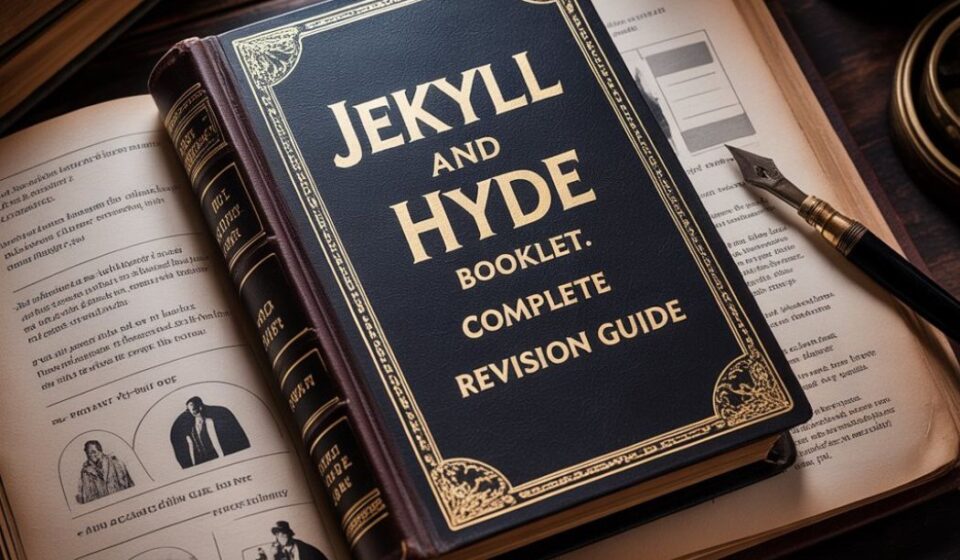
A Jekyll and Hyde booklet is a printed or digital resource centered on Robert Louis Stevenson’s novella The Strange Case of Dr Jekyll and Mr Hyde. It can serve many purposes: an exam revision guide for students, a structured note‑taking workbook, a full text with annotations, a theatre programme for a stage adaptation, or even a collector’s edition celebrating the story. In short, it’s any booklet‑format companion that helps you understand, teach, perform, or enjoy the tale of duality.
2. What are the main types of Jekyll and Hyde booklets?
From the blog post, the most common types include:
-
Educational / revision booklets – Contain plot summaries, character profiles, theme analyses, key quotes, and exam practice.
-
All‑in‑one study booklets – Include the full novella text alongside line‑by‑line annotations, margin questions, and space for notes.
-
Targeted support booklets – Simplified language, graphic novel panels, and retrieval tasks for lower‑ability students.
-
Critical interpretation guides – Introduce literary criticism, critic quotes, and theoretical frameworks for A Level or high‑achieving students.
-
Theatre programmes & souvenir booklets – Sold at stage or musical productions (e.g., Jekyll & Hyde the musical), featuring cast photos, creative team bios, and production notes.
-
Education packs for plays – Created for touring theatre companies, including cross‑curricular activities and pre‑/post‑show discussion points.
-
Collector’s editions – Deluxe novella printings with foiled covers, sprayed edges, ribbon markers, and sometimes artist‑focused booklets (e.g., musician HYDE’s “JEKYLL & HYDE” photobook).
3. Who should use a Jekyll and Hyde booklet?
-
Secondary school students (especially GCSE English Literature) – For revision, quote memorisation, and exam technique.
-
Teachers – To save planning time with ready‑made workbooks, PowerPoints, and differentiated tasks.
-
A Level or IB students – For critical interpretations and deeper literary analysis.
-
Theatre audiences – To enhance their live experience and keep a souvenir.
-
Collectors and fans – Who appreciate beautiful editions or rare artist collaborations.
4. What key features should a high‑quality educational booklet include?
A top‑tier student booklet will usually contain:
-
Full coverage of themes – Duality, repression, secrecy, violence, addiction, good vs. evil, science vs. religion.
-
Character breakdowns – Jekyll, Hyde, Utterson, Lanyon, Enfield, Poole, with key quotes and roles.
-
Context – Victorian London, the gentleman’s code, gothic genre, Darwinism, fears of degeneration.
-
Writer’s methods – Narrative structure (fragmented, multiple documents), symbolism (doors, potions, cities), imagery, foreshadowing.
-
Exam practice – Sample questions, model answers, PEEZLE/PETAL paragraph guides, mark scheme insights.
-
Interactive elements – Fill‑in‑the‑blank exercises, quote‑matching tasks, mind‑map prompts, self‑assessment checklists.
-
Clear layout – Headings, colour‑coded sections (if printed), and generous space for note‑taking.
5. Where can I buy or download a Jekyll and Hyde booklet?
-
Educational publishers – CGP, York Notes, Collins, and Scholastic produce printed revision guides (often available on Amazon, Book Depository, or directly from publishers).
-
Teacher resource platforms – TES (Times Educational Supplement) and Twinkl offer downloadable PDF booklets, often for a small fee or subscription.
-
Free school resources – Many schools and exam boards (e.g., AQA, Edexcel) provide free PDF workbooks on their websites or via institutional logins.
-
Theatre venues – Souvenir programmes are sold at the box office during a production’s run.
-
Specialist bookstores – Collector’s editions can be found at Folio Society, Easton Press, or rare book sites like AbeBooks.
-
Music or artist merchandise – For unique booklets like HYDE’s “JEKYLL & HYDE” set, check the artist’s official store or concert merchandise stands.
6. Are there Jekyll and Hyde booklets tailored to specific exam boards?
Yes. Many publishers produce booklets labelled for AQA, Edexcel, OCR, Eduqas, or WJEC GCSE English Literature. These are aligned to each board’s assessment objectives, text versions, and question styles. For example, an AQA booklet will focus on the AQA‑recommended extract and essay structure, while an Edexcel booklet may emphasise thematic linking across the whole novella. Always check the cover or product description for your exam board.
7. Can I use a Jekyll and Hyde booklet for self‑study, or do I need a teacher?
Absolutely you can self‑study. Booklets designed for revision are written in clear, student‑friendly language and include answers or model responses. They often have step‑by‑step guides to essay writing, so you can work independently. However, if you choose a “note‑taking booklet” (blank structured pages with prompts), you may need access to the novella and possibly online summaries or video lessons to fill it out thoroughly.
8. What’s the difference between a “study booklet” and a “theatre programme” booklet?
-
Study booklet – Focuses on literary analysis, exam technique, historical context, and has no connection to a specific live performance. It’s designed for classroom or home use.
-
Theatre programme – Tied to a particular stage or musical production. It contains cast lists, director’s notes, rehearsal photos, costume designs, and sometimes a synopsis. It may include a small amount of background on Stevenson, but its main purpose is to enhance the live theatre experience and serve as a keepsake.
9. Are there digital versions (PDF) of Jekyll and Hyde booklets?
Yes, many are available as printable PDFs or interactive PDFs (with clickable navigation, fillable fields). Digital versions are popular with teachers for Google Classroom or with students who prefer tablets. Some platforms (e.g., TES, Kindle Store, Google Books) sell digital downloads. Free PDF booklets from schools or exam boards are usually non‑interactive but can be printed or annotated with a PDF reader.
10. How can a teacher use a Jekyll and Hyde booklet in the classroom?
Teachers can:
-
Print one per student as a term‑long workbook, replacing separate worksheets.
-
Set homework from specific pages (quote analysis, practice exam questions).
-
Differentiate by giving struggling readers the “support booklet” and advanced students the “critical interpretations booklet”.
-
Use bundled resources – Many booklet sellers include a PowerPoint deck and lesson plan alongside the PDF.
-
Run revision workshops – Hand out a revision‑focused booklet before mock exams.
11. What makes a collector’s edition booklet different from a standard one?
Collector’s booklets are often:
-
Limited print runs – Numbered copies, signed by artists or contributors.
-
High‑quality materials – Thick paper, cloth binding, foil stamping, slipcases.
-
Extra content – Never‑before‑published letters, original illustrations, essays by famous scholars, or (in the case of the HYDE music booklet) exclusive photography and interviews.
-
Not primarily educational – They celebrate the artefact itself, though they still contain the full story.
12. Do I need to read the original novella first before using a booklet?
It’s highly recommended. A study booklet is designed to support your reading, not replace it. Reading the original text gives you the full atmosphere, narrative tension, and Stevenson’s prose style – all of which exam questions test. However, a “support booklet” with simplified language or graphic novel extracts can help struggling readers approach the original more confidently.
13. How many pages is a typical Jekyll and Hyde booklet?
-
Quick revision guide – 20–40 pages.
-
Full study booklet – 50–100 pages (including the novella text, annotations, and activities).
-
Theatre programme – 16–32 pages, often glossy.
-
Collector’s edition – Varies widely; could be 100+ pages for a deluxe illustrated novella plus essays.
14. Can I create my own Jekyll and Hyde booklet?
Yes. Teachers and students often make personalised booklets using:
-
Templates from Canva, Google Docs, or Microsoft Word.
-
Free online content – SparkNotes, BBC Bitesize, LitCharts, and open‑access critical articles.
-
Blank note‑taking booklets – Some publishers sell structured templates (e.g., “My Jekyll and Hyde Revision Booklet”) where you fill in the answers yourself.
Creating your own is a powerful learning tool because writing your own notes and summaries deepens retention.
15. Are Jekyll and Hyde booklets only for GCSE? What about university students?
While most are aimed at GCSE (age 15–16), there are booklets for:
-
Key Stage 3 (age 11–14) – Simplified language and creative tasks.
-
A Level (age 16–18) – Critical theory, advanced literary criticism, historicist approaches.
-
University – Less common as a “booklet”, but you can find scholarly companions (e.g., Norton Critical Edition) which function as extended booklets with essays and contextual documents.
If you’re a university student, look for “critical editions” or “study guides” by Routledge, Bloom’s, or York Notes Advanced.
16. How do I choose the best booklet for my needs?
Use this quick decision guide:
| Your need | Best booklet type |
|---|---|
| Exam revision (GCSE) | Board‑specific revision booklet |
| Understanding the story from scratch | All‑in‑one with full text + notes |
| Low confidence / lower ability | Support booklet (graphic / simplified) |
| Top grades / deeper analysis | Critical interpretations booklet |
| Teaching a class | Teacher bundle (booklet + PPT + plans) |
| Attending a play / musical | Theatre programme / souvenir |
| Collecting beautiful books | Deluxe collector’s edition |
17. Are there any free, high‑quality Jekyll and Hyde booklets online?
Yes, several reputable sources offer free PDFs:
-
BBC Bitesize – Printable revision cards and mini‑guides (though not a full booklet, you can compile them).
-
AQA / Edexcel – Past paper booklets and sample assessment materials (free on exam board websites).
-
TES – Many teachers upload free booklets (filter by “price: free”).
-
School websites – Some secondary schools publish their home‑made revision booklets for public download.
Always check the date to ensure the booklet matches the current specification.
18. Can a Jekyll and Hyde booklet help with memorising quotes?
Absolutely. Most revision booklets dedicate pages to key quotation tables organised by theme or character. Good booklets also include:
-
Fill‑in‑the‑blank quote exercises – e.g., “I feel… ______ by my own knowledge.”
-
Quote‑to‑theme matching tasks.
-
Blank spaces for you to rewrite quotes from memory (active recall).
-
Audio links (some digital booklets) for listening and repeating.
19. Do theatre booklets contain spoilers for the play?
Theatre programmes typically include a synopsis of the story, which would give away the plot. If you want to go in completely fresh, avoid reading the “plot summary” or “scene breakdown” section. However, most audiences already know the basic Jekyll and Hyde twist (that they are the same person) – it’s not considered a spoiler in modern productions.
20. What is the most popular Jekyll and Hyde booklet for GCSE students?
Based on sales and teacher recommendations, the CGP GCSE English Literature – The Strange Case of Dr Jekyll and Mr Hyde: The Text Guide is a perennial favourite. It’s slim (approx. 70 pages), packed with colour‑coded themes, character maps, practice questions, and a very student‑friendly tone. For a more comprehensive all‑in‑one book, the Collins GCSE Snap Revision Text Guide is also highly rated.