

In the world of culinary arts, the difference between a frustrating cooking experience and a sublime one often comes down to the sharpness of a knife. While high-carbon steel and ergonomic handles are crucial, the true secret to a blade’s performance lies in the sharpening process. For decades, discerning chefs and enthusiasts have turned to a specific standard of sharpening tools known as Murray Hone. This is not merely a brand name but a representation of precision engineering designed to restore, refine, and rejuvenate the cutting edge. To understand the integrity of a well-used chef’s knife, one must first understand the role that a Murray Hone plays in maintaining its longevity and precision. This article explores the history, the mechanical science, and the practical techniques that make this sharpening tool an indispensable asset in both professional kitchens and home culinary sanctuaries.
The History and Evolution of the Murray Hone
The origin of the Murray Hone is rooted in a response to the shortcomings of traditional sharpening steels. Historically, cooks relied on simple steel rods that, while effective for straightening a rolled edge, did little to actually abrade and sharpen the blade. The Murray Hone emerged as a revolutionary product by incorporating materials like ceramic, diamond-coated abrasives, and specialized oval shapes that provide greater surface contact.
Engineers designed the Murray Hone to bridge the gap between a honing steel and a whetstone. Unlike traditional round steels that offer a narrow contact point, the elliptical or flat-sided design of a Murray-Hone ensures that the entire bevel of the knife makes contact with the abrasive surface. This evolution in design means that the tool does not just align the edge; it removes microscopic amounts of metal to create a truly sharp, lasting apex. For the modern cook, owning a Murray-Hone represents a shift from temporary fixes to permanent maintenance.
Why the Murray Hone Outperforms Traditional Steels
When comparing a standard butcher’s steel to a Murray Hone, the differences in metallurgy and geometry become immediately apparent. A standard steel is typically made of a softer metal, designed to “burnish” or push the blade edge back into alignment. While this is useful for quick fixes, it does not sharpen the knife. In contrast, a Murray Hone utilizes a harder material than the knife steel itself.
Superior Abrasive Technology
Manufacturers construct the Murray Hone using materials such as industrial diamonds or ultra-fine ceramics. This hardness allows the tool to grind away fatigued metal, revealing a fresh, sharp edge underneath. When a knife begins to feel dull, a few passes on a Murray Hone can restore its ability to slice through a tomato skin without crushing the flesh—a feat that a standard steel often cannot achieve.
Enhanced Surface Geometry
Furthermore, the geometry of the Murray Hone contributes significantly to its efficacy. The oval or rectangular shape prevents the common issue of “cupping,” where a round steel creates a concave dip in the blade’s edge over time. By maintaining a flat, consistent bevel, the Murray Hone extends the overall lifespan of the knife, preventing the need for frequent, heavy grinding on coarse stones.
Proper Technique: Mastering the Murray Hone
Owning a Murray Hone is only half the battle; using it correctly is where the art of sharpening truly lies. Many home cooks damage their blades by using incorrect angles or excessive pressure. To maximize the benefits of a Murray Hone, one must adhere to a disciplined technique.
Finding the Correct Angle
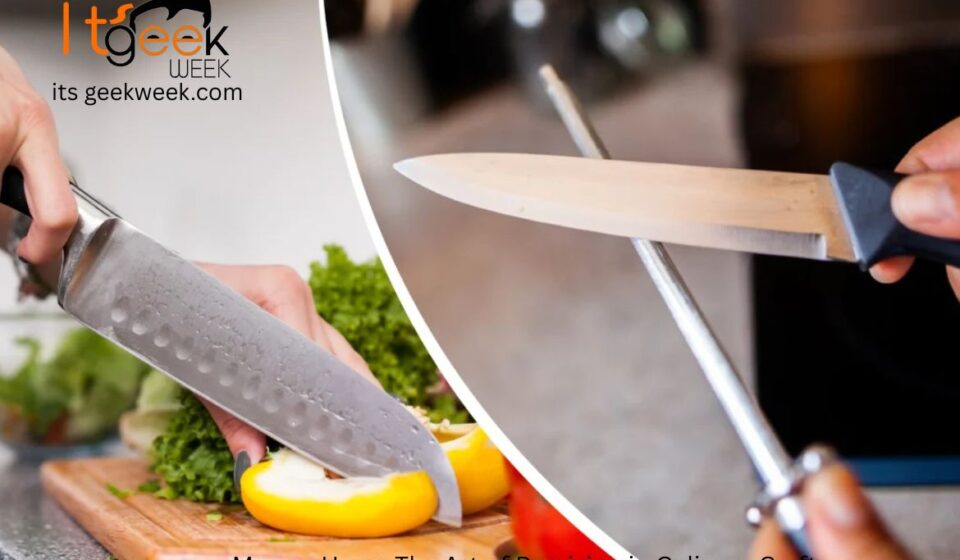
The most critical factor is the angle. Most Western knives require a 15 to 20-degree angle relative to the sharpening surface. To use a Murray Hone, hold the handle firmly with your non-dominant hand, placing the tip on a stable cutting board. With the knife in your dominant hand, position the blade heel against the top of the hone at the desired angle.
-
Active Voice: You must maintain this angle consistently throughout the stroke.
-
Active Voice: You sweep the knife from heel to tip, moving the blade down the length of the hone in a smooth, arcing motion.
Pressure and Frequency
You should apply light to medium pressure. The Murray Hone does its job through abrasive quality, not brute force. Pressing too hard can chip the edge or cause uneven wear. For the average home cook, using it once every three to four cooking sessions is sufficient. In a professional setting, chefs often use it daily before starting their prep work. The goal is proactive maintenance; by using the Murray Hone regularly, you prevent the knife from ever reaching a state of true dullness.
Different Types of Murray Hone Tools
Not all sharpening tools are created equal, and it lineup typically offers various grit levels and materials to suit different needs. Understanding these variations allows you to select the right tool for your specific knife steel.
-
The Diamond Murray Hone: This variant uses a surface coated in diamond dust. It is the most aggressive and is ideal for extremely dull knives or for setting a new edge. Because diamonds are the hardest known material, a diamond Murray Hone cuts quickly and efficiently. However, users should handle it with care to avoid over-grinding.
-
The Ceramic Murray Hone: Ceramic hones are slightly less aggressive than diamond but offer a finer finish. They are perfect for daily maintenance and creating a polished, razor-sharp edge. A ceramic works exceptionally well on Japanese-style knives, which typically use harder steel that requires a finer abrasive to prevent micro-chipping.
-
The Oval Steel Hone: While technically made of steel, the oval design and specific hardening process of this Murray Hone variant allow it to perform better than generic round steels. It is best suited for softer German-style knives (like Wusthof or Henckels) that benefit from a gentler touch.
Maintenance and Care for Your Sharpening Tool
To ensure the longevity of your Murray Hone, you must maintain it as diligently as you maintain your knives. A common misconception is that sharpening tools do not require cleaning. In reality, metal filings accumulate on the surface over time, which can reduce effectiveness and potentially scratch the knife blade.
After each use, you should clean the Murray Hone with a damp cloth to remove metallic dust. For ceramic or diamond models, you can scrub them gently with a soft brush and mild detergent. You should never drop it, as the abrasive materials can be brittle. Storing it in a dedicated block or sheath protects the surface from damage.
Conclusion
The pursuit of culinary excellence is defined by attention to detail. While the ingredients provide the flavor, the tools provide the execution. A dull knife is not only inefficient but dangerous, requiring more force and offering less control. The Murray Hone stands as a bulwark against this decline. It represents a commitment to quality, offering a user-friendly yet highly effective method for maintaining the most important tool in the kitchen.
By moving beyond outdated sharpening methods and embracing the precision of it, cooks transform their daily prep work from a chore into a seamless experience. Whether you choose a diamond variant for heavy-duty restoration or a ceramic model for daily honing, the result remains the same: a consistently sharp, safe, and reliable blade. Investing in a Murray Hone is not just an investment in a tool; it is an investment in the craft of cooking itself.
Frequently Asked Questions (FAQs)